Ways of Sound: The Music and Dance of Setesdal
The Setesdal Valley in southern Norway is renowned for its vibrant traditions of music, dance, and song, which are an integral part of the region's cultural identity. In 2019, UNESCO recognized these practices by adding them to the Representative List of the Intangible Cultural Heritage of Humanity.
At the heart of Setesdal’s musical tradition is the Hardanger fiddle, Norway’s national instrument. It is often played alongside the jaw harp. The repertoire includes distinctive modal tunes marked by rhythmic bowing and ornamentation; many of these tunes are tied to the traditional gangar dance. Music is performed for both dancing and listening, allowing for solo expression and group performance.
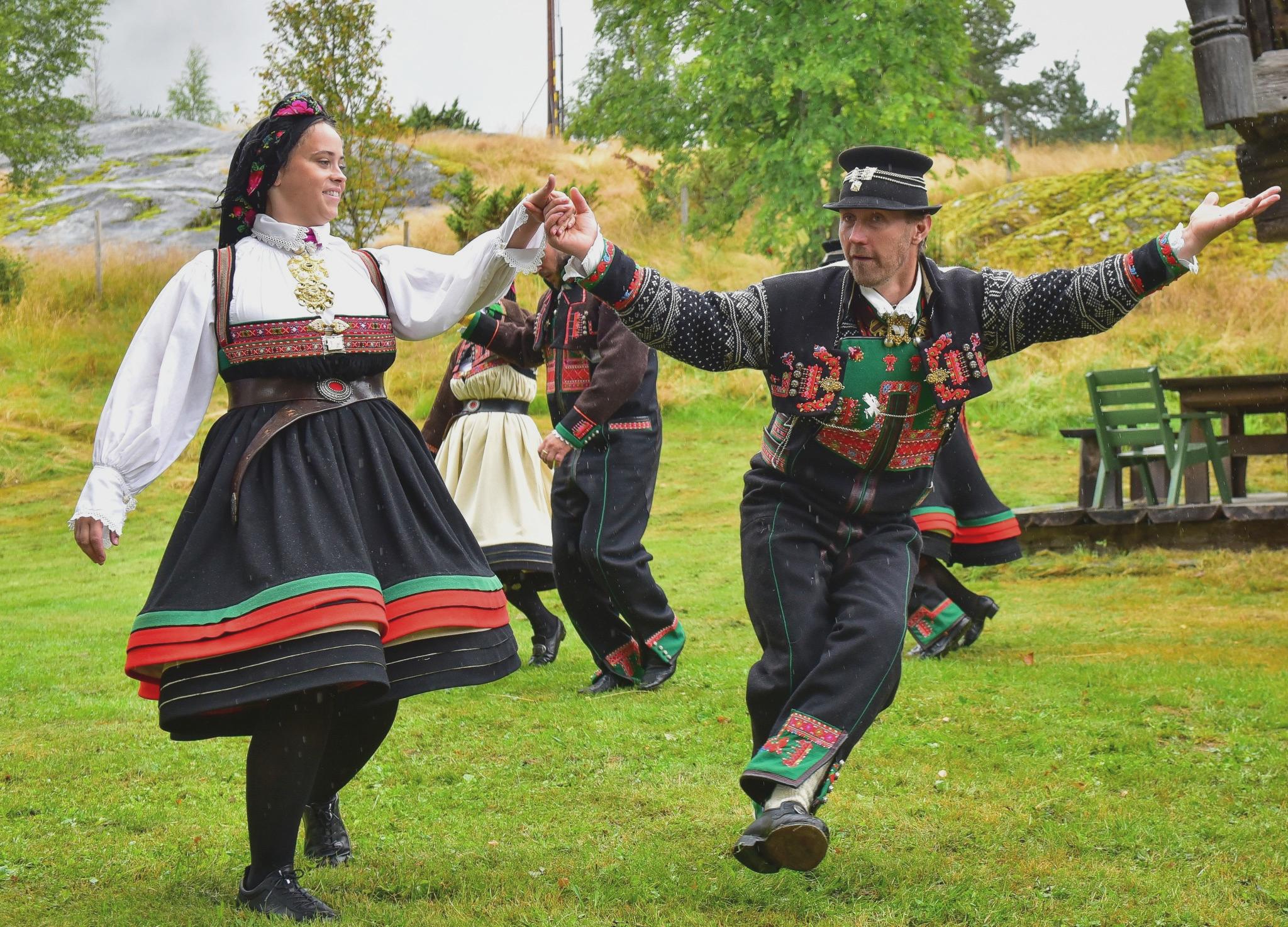
Traditional dances are usually performed in pairs, either solo or in groups moving clockwise in a circle, often with changing partners. The style ranges from restrained to wild, allowing for personal interpretation. Music and dance are inseparable here—each informs the other, and many tunes are composed specifically to accompany dance.
A vital part of Setesdal’s oral tradition is the stev, a short, four-line rhyming verse that may be lyrical, humorous, or reflective. These compact poems are sung either solo or as a dialogue, a form known as stevjing. Stev are typically performed during breaks in dancing or at social gatherings and serve as a form of storytelling, expression, and cultural memory. There are two main types: the older gamlestev, with an ABAB rhyme scheme, and the newer nystev, with an AABB rhyme scheme. Both types date back centuries. New verses are still being created today, keeping the form dynamic and alive.
Stev and stevjing are deeply woven into the music and dance culture of Setesdal, often alternating with instrumental pieces during performances. Stevjing also helps preserve the local dialect and reflects everyday life, love, hardship, and humor.
The music and dance of Setesdal are notable for their distinctive tonalities and improvisational style. The Hardanger fiddle produces a resonant, haunting sound with its sympathetic strings and ornate decoration, which is emblematic of Norwegian folk music. Performers often use complex bowing techniques and ornamentation, resulting in tunes that are rhythmically intricate and emotionally expressive. The gangar, a walking dance, is one of several traditional dances from the region, each with its own characteristic steps and musical accompaniment.
Kirsten Bråten Berg is one of the most significant modern performers of stev. Born in Arendal in 1950, she has lived in Setesdal, a region famous for its rich folk music traditions, including stev and stevjing, since 1973. Initially trained as a silversmith, she soon became deeply involved in Norwegian folk music, learning from older tradition bearers and recordings. Her singing style is rooted in kveding, traditional Norwegian vocal music, and stev, the short, four-line poetic form, is a central part of her repertoire.
These traditions are primarily passed down through families and communities via oral tradition. Today, schools and cultural institutions also help to carry them forward. The scene is inclusive and community-driven, with music and dance performed in homes, schools, at festivals, and during weekly gatherings.
In recent decades, there has been a revival of interest in Setesdal's folk traditions, both in Norway and abroad. Local festivals, workshops, and educational programs have played a crucial role in engaging younger generations. Supported by organizations such as the Setesdal Folk Music Association, these efforts ensure that the living heritage of music, dance, and stev continues to evolve while remaining deeply rooted in the valley’s history and community life.
Organizations such as the Setesdal Folk Music Association and the Sylvartun Center play a vital role in preserving and sharing these traditions. For the people of Setesdal, music and dance are more than just performances; they are expressions of place, memory, and pride.