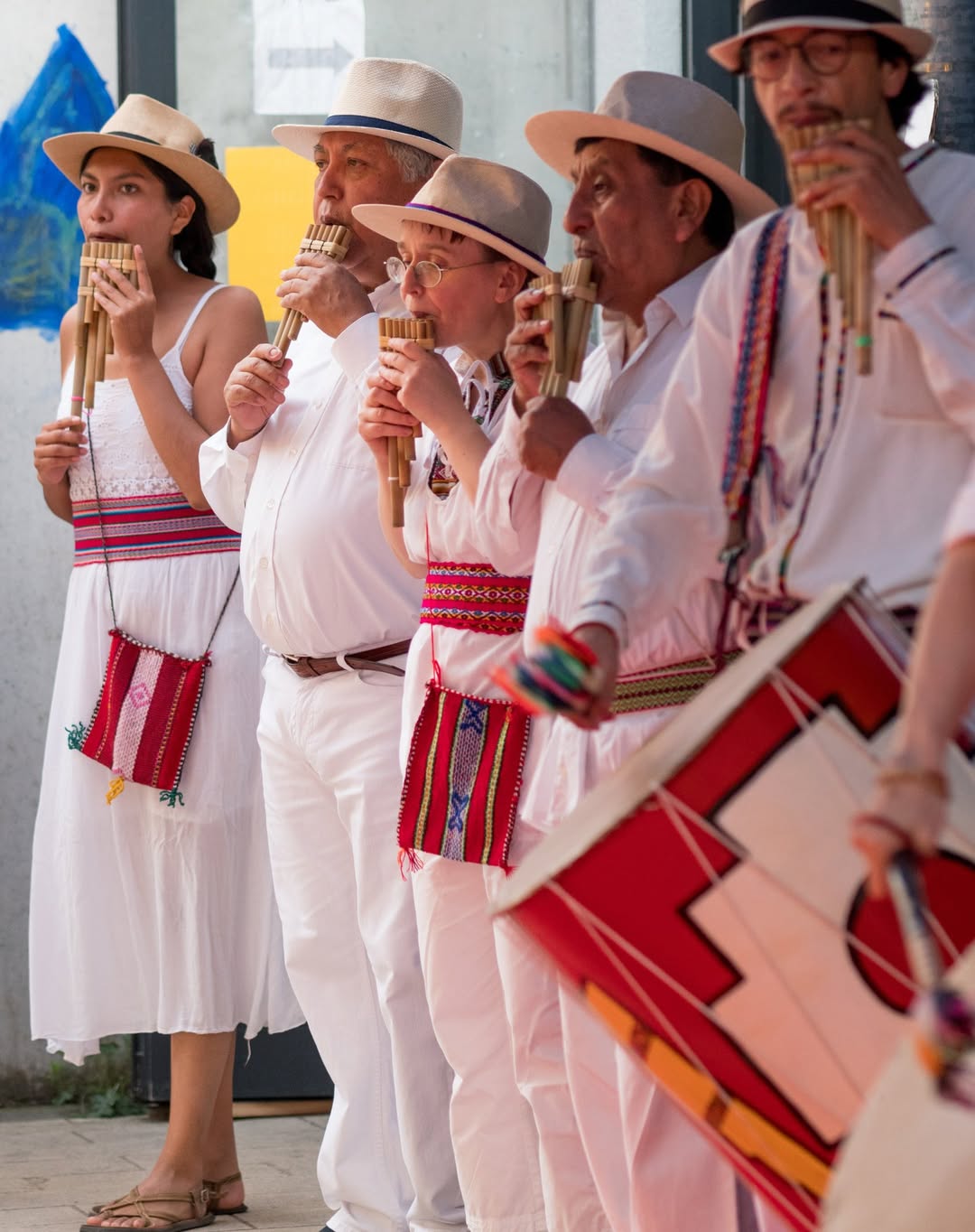
Comunidad Sikuris and Indigenous Latin American Music in Berlin
Sikuri music is a communal musical tradition from the Andean highlands of Peru and Bolivia with deep roots in pre-Inca indigenous culture. It revolves around the siku, also known as the zampoña in Spanish or entre in Quechua, a type of bamboo panpipe that is played collectively. The music is cyclical and rhythmic, and inherently communal: every melody requires two players, symbolising reciprocity, duality, and balance — night and day, male and female, earth and sky.
Traditionally, large groups of Sikuri musicians perform at festivals, processions and ceremonies in honour of Pachamama (Mother Earth) and ancestral spirits. The sound connects people with nature and their community, creating a powerful spiritual and social force. The history of the music is also political: ever since the arrival of the conquistadors, it has been a symbol of resistance, surviving centuries of suppression.
Sounds amazing, right? Well, it turns out that you can find and hear Sikuri music in places other than Latin America. The tradition is alive and well in Berlin, a multicultural city hosting this year's Freeform Tradition festival.
In this diverse city, where migrant communities bring their own music and stories, the sound of the sikuri can be heard in public squares, at demonstrations, and at festivals. The main collective is Comunidad Sikuris, comprising indigenous and migrant musicians from Peru, Bolivia, Argentina, Ecuador and beyond.
The group first came together in 2018 at a protest against the proposed release of Peruvian dictator Alberto Fujimori, who oversaw the forced sterilisation of 300,000 indigenous people in the 1990s, rather than at a festival. Since then, the group's music has become a familiar part of the city’s activist scene, echoing through May Day marches and filling squares on 12 October, a day marked by indigenous communities as Abya Yala Day to commemorate the beginning of resistance to colonisation. You can also hear their music at migrant demonstrations across Berlin.
“We blow harder and play louder at protests,” explains one member. “The energy comes from the crowd.” For these musicians, every performance is a political act — a declaration of their existence in a world that has tried to silence them. While passers-by may hear festive panpipes, the sikuris hear centuries of memory and struggle.
Yet Comunidad Sikuris is not just about protest. Their presence in Berlin reshapes the practice itself, adapting Andean ritual to urban, migrant life. Instead of performing in mountain valleys, they play in the streets and parks of the city, adjusting their arrangements so the sound carries through the urban landscape. They continue to play instruments made from natural materials such as bamboo, wood, and cane, occasionally using locally sourced German woods as substitutes. They have even built smaller instruments for children, ensuring that the tradition can flourish with a new generation, far from the Andes.
Their performances blur the line between players and audience. The cyclical, call-and-response patterns of the sikuri invite listeners to join in with the rhythm, transforming concerts into moments of community and joy. Workshops and open rehearsals in Berlin enable newcomers — migrants and locals alike — to try playing the panpipes themselves, thus turning Andean music into a shared urban ritual.
Photo by Sulamith Sallmann