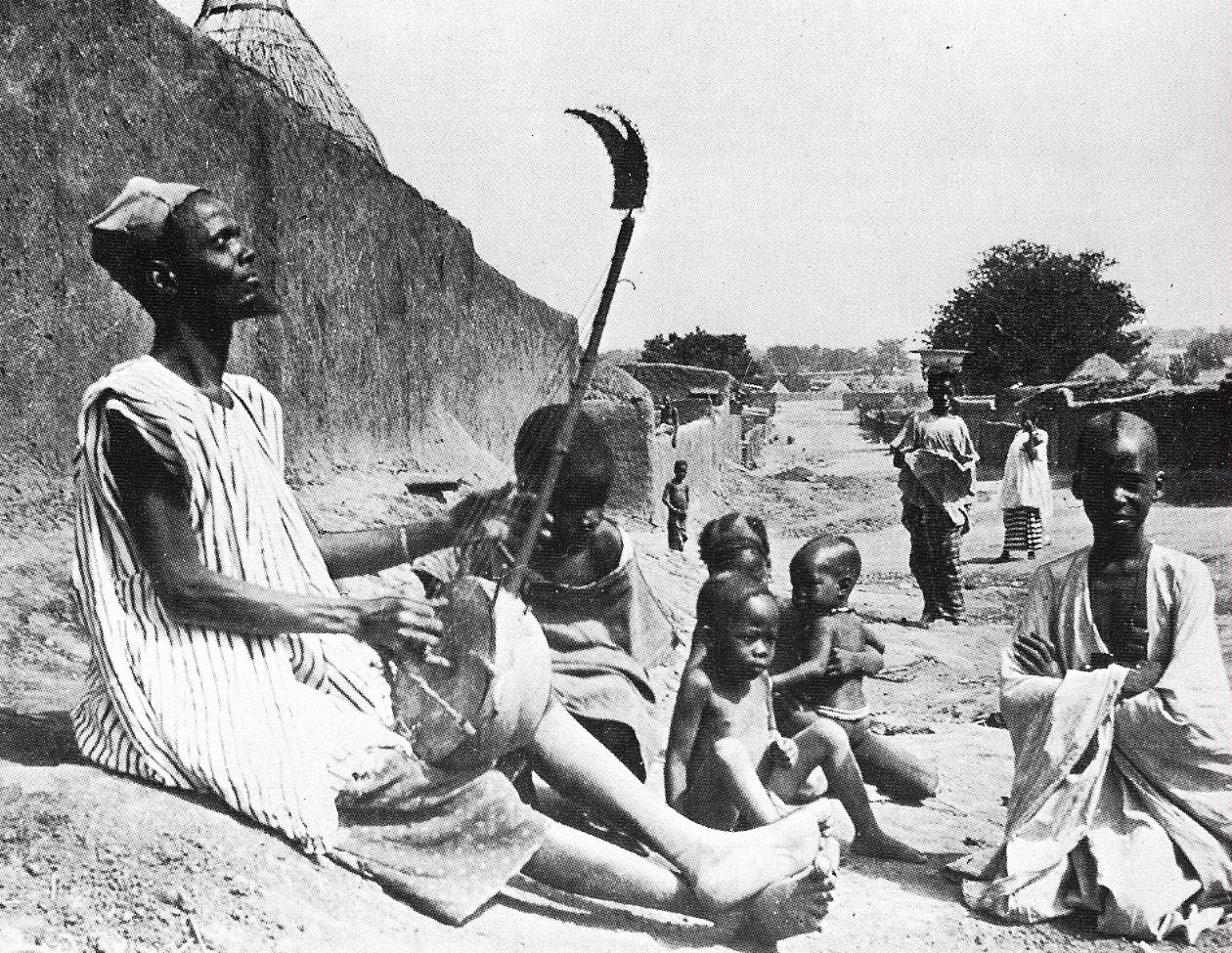
Ways of Sound: Griots
Music plays all kinds of roles in our lives. It’s there when we work, relax, celebrate; it brings people together, helps us heal, and makes everyday life feel richer. But one of music’s oldest and most powerful roles is as a tool for memory. It helps us pass down stories, share news, and remember history.
Way before writing was invented, music was how people told and remembered important stories. Traveling musician-storytellers were a big part of life in many cultures. They didn’t just entertain, they preserved knowledge. Epic tales like “The Odyssey”, “The Epic of Gilgamesh”, and the Icelandic sagas weren’t originally written down — they were sung. Rhythm, repetition, and familiar phrases made them easier to remember and pass on through generations.
You can find this tradition all over the world. In Viking-age Scandinavia, there were skalds. In ancient Greece, aioidoi. In Bhutan, storytellers traveled from village to village, sharing songs and stories as part of local hospitality rituals. And in West Africa, there are griots — and they’re still going strong today.
Griots are more than just musicians. They’re storytellers, historians, poets, and cultural guardians. Their roots go back centuries, as far as the 13th-century Mali Empire, and maybe even earlier. The tradition is especially strong among the Mande people but also exists across many West African cultures like the Fulɓe, Wolof, Songhai, and Hausa.
Griots often perform with traditional instruments like the kora (a 21-string harp-lute), the balafon (a type of xylophone), and the ngoni (a lute-like string instrument). But their music is just one part of what they do. They sing about history: family trees, local heroes, the rise and fall of rulers. They used to advise kings, mediate conflicts, and even act as diplomats between communities.
They also spread news. Griots would go from door to door sharing updates, often using music and metaphor to make the stories engaging and easy to remember. Even today, some griots take on that role in radio and other media, helping people understand what’s going on in their communities.
Being a griot is a lifelong calling, passed down from generation to generation. Young griots spend years learning their craft, memorizing stories, mastering instruments, and perfecting the art of performance and speech. When a griot passes away, it’s often said it’s like a whole library burning; so much of their knowledge is carried in memory, not books.
It might sound like a thing of the past, but griots are still very much part of life today. They continue to perform at ceremonies, collaborate with contemporary musicians, and tour internationally. Griots are still recognized as oral historians, musicians, and poets—and they remain vital figures at life events like weddings, naming ceremonies, and funerals. At these gatherings, they share family histories and honor ancestors, adding depth and meaning to the occasion.
Artists like Prince Diabaté and Pape Demba "Paco" Samb are helping keep the tradition alive and introduce it to global audiences.
And of course, though transformed, the spirit of the griot tradition lives on in modern music—especially hip-hop. When early Jamaican DJs were “toasting,” rhythmically speaking over music, they were drawing on storytelling traditions that echo the griot’s role. This practice made its way to New York through Caribbean immigrants like DJ Kool Herc and helped shape the birth of hip-hop.
Some scholars see a clear cultural thread connecting griots to hip-hop. Both are grounded in storytelling, rhythm, and speaking truth to power. Their social roles and cultural settings are different, but the shared drive to preserve memory, convey meaning, and move people through words and sound links them across time.