Ways of Sound: Inuit Drum Dancing and Singing
Since the 1980s, archaeologists have been excavating two ancient, deep-frozen Greenland settlements: Qeqertasussuk and Qajaa. Decades of careful digging have brought countless tools and objects to light, including harpoons, lances, tool shafts, kitchenware, and pieces of leather clothing. More recently, they discovered a fragment of a drum hoop.
These sites are over 4,500 years old and provide evidence that Inuit drum dancing and singing have been part of Greenland's culture for thousands of years.
Drum dancing and drum singing are two indigenous forms of artistic expression and music in Greenland. They are also on the UNESCO List of Intangible Cultural Heritage. However, European colonization and missionary influence suppressed drum dancing for centuries in many Inuit regions, particularly in areas such as Labrador, Greenland, and Canada.
In some areas, the tradition nearly disappeared for several generations as communities underwent forced relocations and cultural assimilation, causing knowledge of drummaking and song composition to fade.
In the early 21st century, however, Inuit communities began actively reviving drum dancing, particularly in regions where it had disappeared, such as Labrador. This revival is seen as a source of cultural pride and identity for new generations. Drum dancing and singing are performed during national holidays, festive celebrations, and social events, either solo or in groups. Sometimes, a single drum dancer is accompanied by a choir.
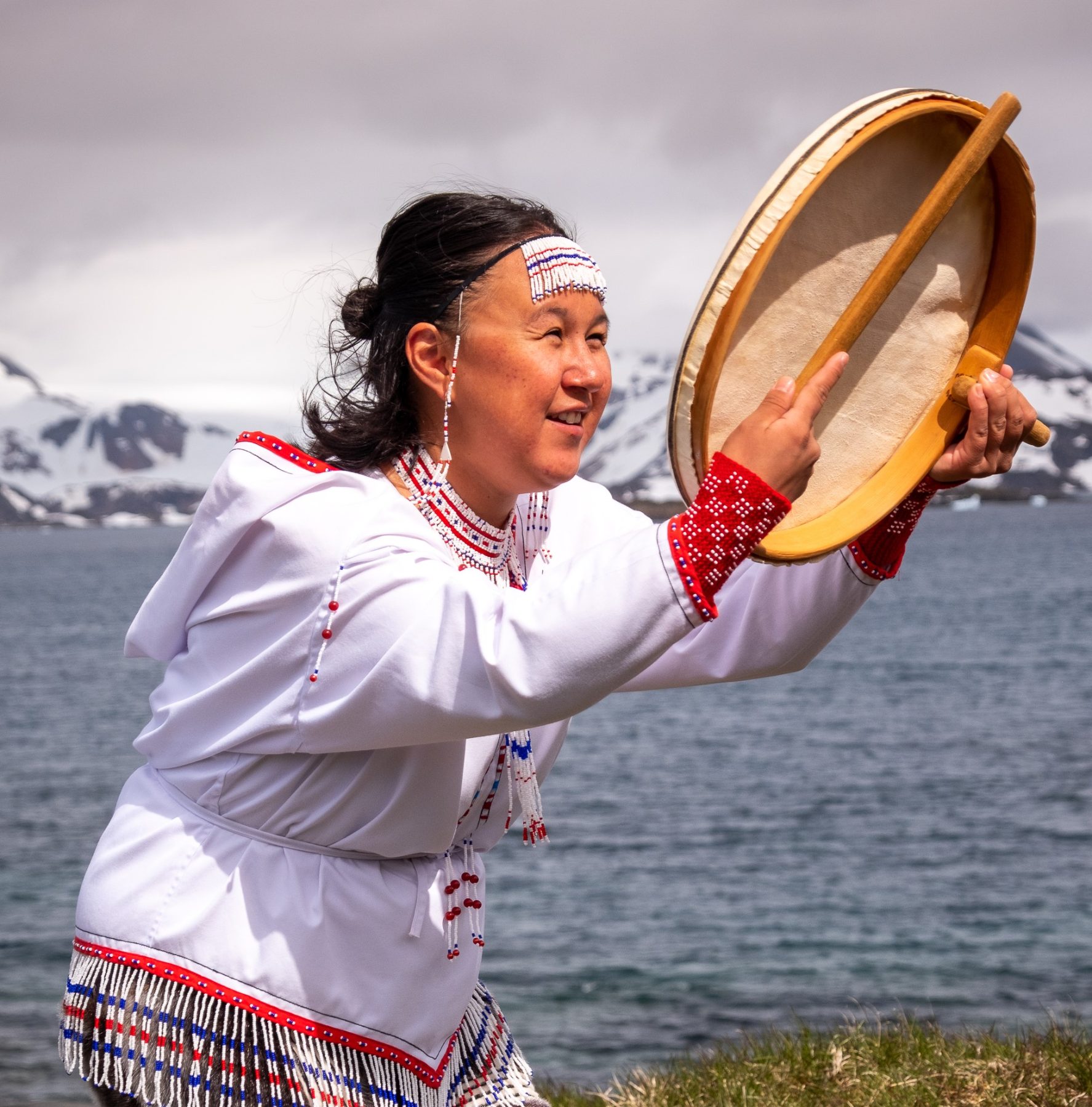
The drum, known as a qilaat, is typically made of wood or bone and covered with animal skin or hide. It is played by striking the frame with a stick, producing a sharp, echoing beat. Modern drum dancers often use contemporary materials, such as synthetic drum skins and new construction methods, making drums more accessible and durable. However, some traditionalists note differences in sound and authenticity.
The performance involves rhythmic movements. The dancer bends their knees slightly, leans forward, and moves the drum in different directions while playing it. Drum songs are lyrical narratives that accompany the drumbeat and often recount experiences of daily life, such as love, longing, humor, and hunting. These inclusive traditions symbolize equity and equality, and are open to all regardless of age, gender, social status, or political views.
While traditional drum songs were once composed according to strict, orally transmitted rules, much of this knowledge has been lost. Today, drum dancing and singing, like many traditions, continues to evolve. Climate change and changes in subsistence practices have affected traditional drum making. For instance, Iñupiat people in Alaska have increasingly used plastic for drum skins due to the scarcity of whale membrane. They adapt to environmental and economic realities while striving to maintain the cultural significance of their music.
Additionally, the introduction of new musical instruments and styles by European whalers and settlers has influenced Inuit music, leading to the adoption of instruments such as the accordion and fiddle, which are now used alongside traditional drumming.
It existed 4,500 years ago, it exists today, and it continues to evolve while maintaining its essence. Inuit drum dancing evolved from a sacred, community-defining practice into a dynamic symbol of cultural resilience. It has adapted to modern realities while striving to maintain its deep-rooted traditions.